See also


Santé publique France has released its annual surveillance data on outbreaks of foodborne illness, which show a sharp 43% decline in reported outbreaks in 2020 compared to 2019, most likely due to the COVID-19 pandemic and the social distancing measures that were implemented.

thematic dossier
A foodborne illness outbreak is defined as the occurrence of at least two cases with similar symptoms—typically gastrointestinal—that can be traced to a single food source. In France, such...
A foodborne illness outbreak (FBO) is defined as the occurrence of at least two cases with similar symptoms—typically gastrointestinal—that can be traced to a single food source. In France, foodborne illness outbreaks have been subject to mandatory reporting (DO) since 1987.
A sharp 43% decrease in the number of reported outbreaks of foodborne illness compared to 2019, most likely due to the COVID-19 pandemic and the social distancing measures implemented (lockdowns, closure of commercial and institutional food service establishments, remote work, etc.).
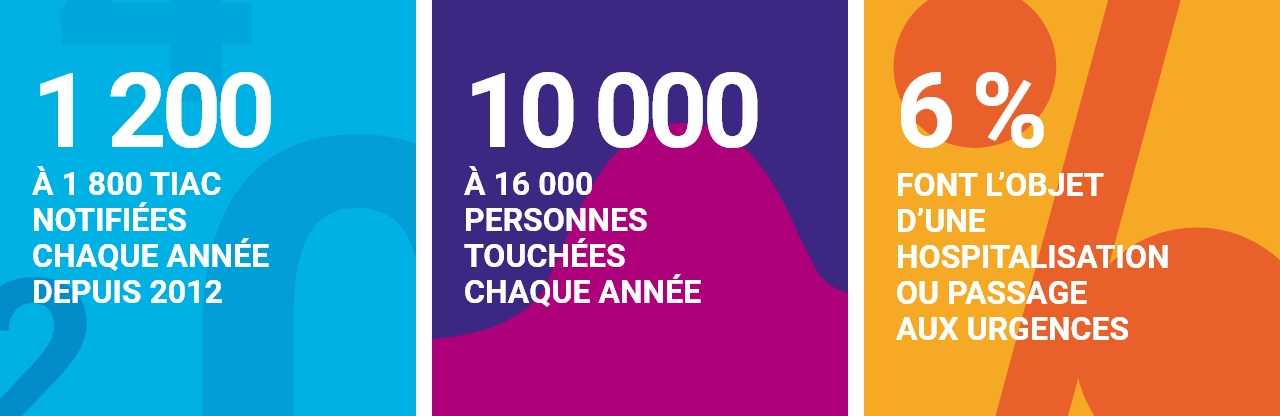
1,010 TIACs were reported in France in 2020, affecting 6,814 people. Of these, 396 (6%) sought hospital care (hospitalization or emergency room visits) and 9 (0.13%) died.
There was a very sharp 61% decrease in the number of foodborne illness cases reported in workplace dining facilities. This decrease was 49% for commercial dining establishments, 46% for school dining facilities, 35% for family meals, and 26% for dining facilities in medical-social institutions (IMS).
As in previous years, the most frequently confirmed pathogen was Salmonella, accounting for 43% of foodborne illness cases in which a pathogen was confirmed (36% in 2019).
The other most commonly suspected pathogens were the toxin-producing bacteria Staphylococcus aureus, Clostridium perfringens, and Bacillus cereus (74% of foodborne illness cases where a pathogen was suspected).
Download

données
21 December 2021
Preventive measures based on hygiene help limit the risk of foodborne illness outbreaks.
See also
Monitoring the epidemiological trends of foodborne illness outbreaks and describing the characteristics of foodborne illness outbreaks
Identify foods, high-risk products, and/or pathogens to stop transmission, guide control and prevention measures, and assess their impact in collaboration with the relevant authorities
Informing the general public
Contribute to food safety

infographics
How does a food safety alert work in France? What is the organizational structure? Santé publique France outlines the process—from patient consultation to the issuance of an alert—in an infographic.