DOWNLOAD

*La Santé en action* is a journal published by Santé publique France that focuses on prevention, education, and health promotion. It is intended for professionals in the fields of education, health, and social services.
To receive the newsletter via email announcing each new issue and providing free access to the issue
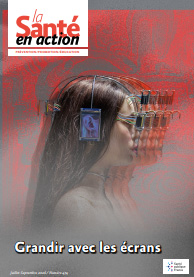
Today, an ultra-connected lifestyle is a reality: in 2025, every household in France had more than ten digital devices. As a result, screens are a major part of children’s and teenagers’ daily lives: 3- to 5-year-olds spend 1 hour and 30 minutes a day on them, while 9- to 11-year-olds spend nearly 2 hours and 30 minutes. Social inequalities are pronounced: those whose parents have lower levels of education spend more time on screens and are more likely to have a screen in their bedroom. Social media use increases in middle school and is more prevalent among girls. Young people acknowledge their heavy use of screens but also find ways to cope with their anxieties online.
The impacts on physical health are now well documented: sleep disorders, sedentary lifestyles, and impaired vision. The effects on mental health are somewhat less well documented. Social media exploits the vulnerability of adolescents, risking drawing them into a spiral of addiction. From a very young age, screens disrupt the parent-infant relationship: this is known as parental “technoference.” However, studies put the impact of screens on children’s cognitive development into perspective, provided their use is supervised.
This argues for collective and proportionate preventive measures, as there is no consensus on banning social media for those under 15 or cell phones in school. To ensure that children and adolescents are not left without safeguards when it comes to screen use, the challenge is to shift from a model of individual responsibility—which places the burden on families—to a collective approach that combines regulation of platform services with prevention and education.
There are many possible courses of action. First and foremost, it involves supporting families, for whom managing screen time has become the primary educational concern. Various tools are made available by organizations and early childhood professionals. Media literacy is essential for young people, as are initiatives—particularly in schools—that encourage them to disconnect. Local governments can also play a role, as demonstrated by the “Growing Up Healthy with Screens” program offered by the city of Bordeaux to raise parents’ awareness and provide children with cultural and sports activities—concrete alternatives to digital media.
Alcohol consumption remains a major problem in France, accounting for 41,000 deaths annually (from cancer, cardiovascular disease, and digestive disorders) and linked to mental health issues (depression, early-onset dementia) as well as violence. Despite an overall decline in consumption—particularly among young people, thanks to increased parental vigilance—consumption levels remain high and are deeply rooted in French culture. There has been a rise in risky behaviors among women, particularly college graduates. Multiple factors are at play: gender inequalities, socioeconomic factors, the workplace, childhood trauma, and more. Aggressive marketing strategies by the alcohol industry (attractive packaging, product availability) and its lobbying against restrictive public policies also play a role.
Alcohol prevention efforts are being carried out on several fronts, with initiatives targeting young people. For example, programs are being implemented in schools in the Loiret and Cher departments to strengthen psychosocial skills, which serve as a protective factor against addiction. At the Lille University Hospital, 15- to 25-year-olds admitted for severe intoxication receive support for several weeks to prevent relapse. Within this network, nonprofit organizations play an essential role alongside healthcare professionals. They are the driving force behind the “January Challenge” (inspired by Dry January), which encourages a month of sobriety—with compelling results: 58% of participants are drinking less eight months later. General practitioners, for their part, are encouraged to identify risky drinking patterns among their patients at an early stage. While prevention is everyone’s responsibility, it must also be supported by ambitious public policies aimed at making our environment less conducive to alcohol consumption.
Special report on alcohol prevention, structured around three main themes: the significant health and social impact of alcohol consumption (physical and mental health, violence, etc.); the numerous and complex determinants of alcohol consumption (cultural, socioeconomic, alcohol industry marketing, etc.); and the links in the prevention chain (target audiences, key moments, collective or individual actions, etc.).

Rural areas, which account for 88% of French municipalities and are home to 22 million people, have poorer health indicators than urban areas. For example, life expectancy at birth there is two years lower than in urban areas. Rural areas are indeed characterized by specific socioeconomic and demographic vulnerabilities. And “the countryside” is not spared from pollution: pesticides, industrial facilities, and road infrastructure expose residents to harm. Local agriculture, often geared toward exports, provides little benefit to residents. The shortage of healthcare professionals limits access to care and preventive services, while transportation challenges hinder education, employment, and social life, especially for young people. However, stakeholders—whether from institutions or nonprofit organizations, professionals, or local elected officials—are committed to promoting health. In Puy-de-Dôme, a network of ambassadors works to combat isolation among older adults. In Vercors, a mobile bus addresses mental health issues among 11- to 25-year-olds. In Lorraine, a regional food initiative promotes access to high-quality, locally sourced food for everyone. Although these initiatives are promising, they would benefit from being more firmly grounded in scientific frameworks, while the concept of health-promoting urban planning is beginning to inspire rural towns in their development projects. The rural world, through its diversity and capacity for innovation, offers valuable lessons and points the way toward public action that transforms living conditions, the environment, and the foundations of social cohesion.
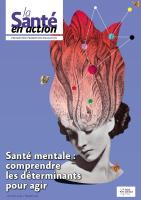
Today, well-known figures—artists, athletes, influencers—publicly share their mental health struggles. This shows just how far we’ve come over the decades, when the “madman” was confined to the walls of psychiatric hospitals or kept hidden within families. This special report from *La Santé en action* sheds light on this major shift: mental health is no longer merely the absence of mental disorders; it is a broader concept that encompasses everyone’s emotional, psychological, and social well-being. This dynamic state is influenced throughout life by a multitude of social, economic, and cultural factors. To improve the mental health of the population—the deterioration of which the COVID-19 pandemic has revealed—it is important to address the underlying determinants proactively through intersectoral public policies. This issue explores possible paths toward collective transformation, whether it involves creating cities that foster the well-being of their residents, workplaces where employees can thrive, or schools where young people feel comfortable and are eager to learn. Beyond that, initiatives and tools exist to ensure that everyone is able to take care of their mental health, just as they do their physical health.
The benefits of health promotion are now well documented. However, the interventions implemented among a target population or in specific settings, such as schools, must be effective. Many current initiatives rely on the goodwill of frontline actors—whether from nonprofit organizations or government agencies—who are feeling their way forward, improvising, and experimenting. But since the programs implemented are not always evaluated, it is difficult to determine their actual impact, even if the beneficiaries report being satisfied. Based on this observation, this issue of *La Santé en action* advocates for the implementation of interventions proven to be effective in order to improve prevention efforts. Impact assessment and cost-effectiveness analysis are crucial, even if they are perceived as complex and time-consuming. It is equally important to provide practitioners—who design programs—with validated resources that are applicable to their professional context, encouraging them not to start from scratch. Access to this scientific knowledge—whether national or international—is now being organized in France across various fields, signaling the beginning of a shift toward evidence-based prevention.

Citizen participation—which gives everyone a greater voice in the development of public policy through conventions, online consultations, and collaborative workshops—is gaining momentum in many areas. This issue of La Santé en action explores the various forms of participation in health care, which enable people to become more involved in decisions that affect not only their own physical and mental well-being but also that of their community. This engagement offers numerous benefits, both individual and collective: it improves the quality of care, promotes people’s autonomy and empowerment, and helps reduce health inequalities, among other things. Today, experiential knowledge is more widely recognized, and citizens are involved in developing health surveys and prevention messages. However, designing health policies not only for populations but also with them requires time and resources. And it faces a challenge: how can we ensure effective and inclusive participation?

Five years after the onset of the COVID-19 pandemic, this issue of *La Santé en action* sheds light on social and regional health inequalities in light of research published on the health crisis. This period—and lockdowns in particular—has exacerbated inequalities in living and working conditions among social groups, regions, women and men, and age groups. Initiatives taken by frontline workers to conduct testing and administer vaccines have demonstrated the importance of “reaching out” to vulnerable populations—those furthest removed from the healthcare system. This is one of the lessons from this unprecedented crisis that calls for socially differentiated public policies that are more inclusive and protective.
Making biodiversity conservation a public health issue is essential because a “healthy” natural world is vital to human survival and well-being. Yet it is clear that contemporary societies, through their ways of life and production, are mistreating nature and drifting away from it… This issue of *La Santé en action* sheds light on the multiple and complex links between nature and individuals’ health (both physical and mental) in light of scientific publications from recent years. A significant chapter is devoted to urban renaturation policies, which require cooperation within local governments between health and environmental departments, as well as medium-term planning tools. Finally, examples are provided, illustrating countless ways to reconnect with the benefits of nature—in daycare centers, schools, retirement homes, community gardens, and more.
Sex education for young people remains a crucial issue, not only in the fight against sexism and sexual violence but also in providing everyone with the tools for a fulfilling emotional, relational, and sexual life. This issue of *La santé en action* aims to show how sex education today is no longer based solely on risk prevention; rather, it is part of a comprehensive vision of health and well-being. This new, positive approach—guided by UNESCO’s international recommendations—emphasizes learning about one’s body and intimacy, as well as communicating about emotions, respecting oneself and others, and more. Consequently, a “comprehensive” sex education program—one that is progressive and tailored to all ages—requires a multidisciplinary approach in both school and out-of-school settings. This represents a shift for those involved, and support is needed to facilitate this transition.