
thematic dossier
Sexually transmitted infections
Les infections sexuellement transmissibles (IST) se transmettent principalement lors des rapports sexuels. Il existe de nombreux virus ou bactéries transmissibles de cette manière.


cp_vih_20261105.pdf
Download (PDF - 336.12 KB)
Santé publique France
presse@santepubliquefrance.fr
Stéphanie Champion: 01 41 79 67 48
Marie Delibéros: 01 41 79 69 61
Camille Le Hyaric: 01 41 79 68 64
Ahead of World AIDS Day on December 1, Santé publique France has released the latest data on HIV, showing encouraging trends: an increase in testing and a decline in the number of new HIV diagnoses. However, it remains essential to tailor prevention measures to the needs of each population and region in order to achieve the HIV elimination goals set by the national sexual health strategy. Throughout December, Santé publique France will be promoting its campaign, “Living with HIV means living first and foremost.”
In 2025, 9 million HIV tests were conducted in laboratories in France, marking a significant increase in testing (+7% compared to 2024).
This increase is largely due to the growing popularity of the “Mon test IST” program, which allows for testing without a prescription and without upfront costs, with 2.3 million tests performed (representing 25% of the total).
The year 2025 shows concrete progress: 9 million HIV tests were conducted, and there was an 18% decrease in the number of new HIV diagnoses—the momentum is there. Public officials, healthcare professionals, organizations, and citizens—our shared goal is clear: to eradicate HIV. Expanding testing, strengthening prevention, and combating stigma are the key priorities guiding our efforts.
In 2025, 4,983 people learned they were HIV-positive, compared to 5,318 in 2023. Despite this decline, including among people born abroad (down 11% since 2023), only the number of new diagnoses among men who have sex with men (MSM) has remained stable, breaking the trend of continuous decline observed through 2022 among MSM born in France.
Early diagnoses have increased by 26% since 2020, while late diagnoses have been trending downward since 2023.
However, despite progress made in prevention (improved screening) and favorable estimates regarding the care cascade,¹ these positive trends are not yet reflected in incidence figures, which have remained stable in France since 2023.
The number of people living with HIV who are unaware of their HIV status was estimated at 8,463 in 2025. Strengthening repeated testing and expanding the use of combined prevention tools (PrEP, condoms, TasP, etc.) is essential to achieving the national goals of eliminating HIV.
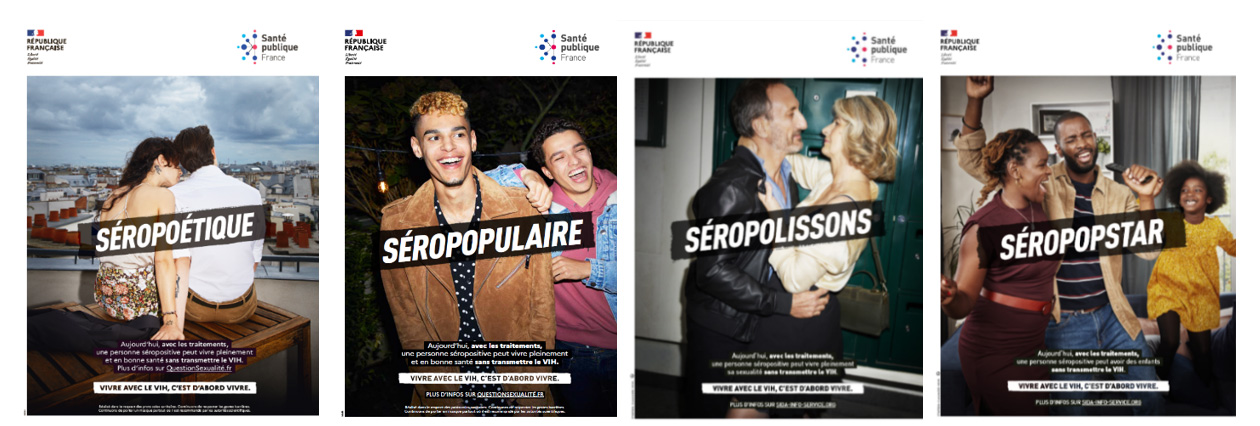
To mark World AIDS Day on December 1, Santé publique France is launching its campaign “Living with HIV means living first and foremost.” This campaign, featured in digital and print formats, aims to reinforce a fundamental message: a person who is HIV-positive and on effective treatment, with an undetectable viral load, does not transmit the virus. Highlighting this reality helps combat prejudice and discrimination, encourages early testing, ensures access to care, and reduces transmission.
1 The patient journey through the various chronological stages of their medical care, from initial diagnosis to successful treatment or disease control: 95% of people living with HIV who have been diagnosed, of whom 95% are receiving antiretroviral therapy, of whom 95% have suppressed viral loads.

thematic dossier
HIV, or Human Immunodeficiency Virus, is a sexually transmitted human retrovirus. It weakens the immune system, and if left untreated, leads to AIDS.
thematic dossier
Les infections sexuellement transmissibles (IST) se transmettent principalement lors des rapports sexuels. Il existe de nombreux virus ou bactéries transmissibles de cette manière.

news

news

news