


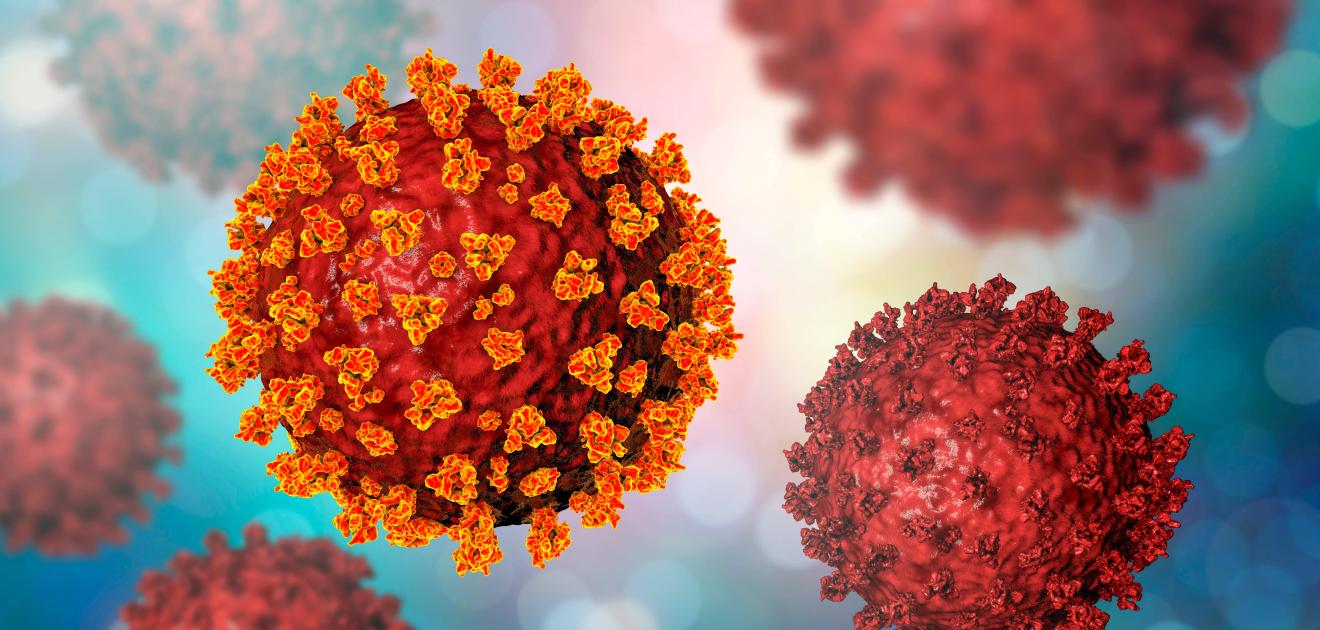
Update on the B.1.617 variant of SARS-CoV-2
On Thursday, April 29, 2021, the B.1.617 variant of the COVID-19 virus, which is widespread in India, was detected for the first time in mainland France. Those at risk were identified and immediately placed in isolation.
Learn more
Read the press release from the Ministry of Health.
What do we know about this variant?
Variant 20A/484Q (B.1.617) is believed to have first emerged in India in December 2020, according to INSACOG (Indian SARS-CoV-2 Genomic Consortium).
It carries two mutations that could be associated with a significant impact in terms of immune escape (post-infection and post-vaccination) and an increased risk of viral transmission. However, these findings have not yet been formally demonstrated at this stage. As of
April 14, 2021, this variant accounts for 61% of sequenced samples in the state of Maharashtra, where it was discovered. In India, it accounts for 15 to 20% of sequenced samples. However, the sample sequencing strategy in India is not precisely described, and India sequences a very small proportion (less than 1%) of positive samples. The 20I/501Y.V1 (UK) variant is believed to be predominant in most regions.
Indian health authorities have classified this variant as a VOC (Variant of Concern). At this stage, no link has been established between the emergence of this variant and the recent deterioration of the epidemiological situation in India.
How is it classified in France?
Santé publique France and the National Reference Center for Respiratory Infection Viruses jointly conduct a weekly risk analysis of the various SARS-CoV-2 variants identified in France and internationally, based on available information regarding their spread and characteristics.
According to the risk analysis as of April 21, 2021, the B.1.617 variant is classified as a variant of interest (VOI).
This category entails the implementation of enhanced national and international surveillance, as well as specific virological analyses of these variants of interest to assess their virological, clinical, and epidemiological characteristics.
To learn more about risk assessments: Coronavirus: Circulation of SARS-CoV-2 Variants
How is it monitored?
As part of the national genomic surveillance strategy led by the EMERGEN consortium, coordinated by Santé publique France and ANRS | Emerging Infectious Diseases, a system for detecting and monitoring potential cases of infection with the B.1.617 variant has been established by Santé publique France and the National Reference Center, in collaboration with clinical laboratories. These laboratories send to the consortium’s laboratories for sequencing any positive PCR test result for a person returning from India or who has been in close contact with a person returning from India, or any PCR test result that may suggest the variant virus.
Stay informed about the COVID-19 pandemic in France and around the world
Updates, Q&As, expert interviews... everything you need to know about the novel coronavirus (SARS-CoV-2) and COVID-19 in France and around the world
Coronavirus: Circulation of SARS-CoV-2 Variants
Many variants of SARS-CoV-2 are circulating in France, and new variants carrying mutations are regularly identified. How are they monitored and classified? Learn all about the...












