
thematic dossier
Work-related illnesses
Dues à des expositions professionnelles, les principales maladies en lien avec le travail sont surveillées par Santé publique France dans l’objectif d’élaborer, avec les partenaires, les...



Santé publique France has released the results of the Sumer study on trends in risk factors for musculoskeletal disorders among construction and public works employees between 2010 and 2017 and is encouraging preventive measures for these populations, which are particularly affected by these occupational diseases.
thematic dossier
Musculoskeletal disorders primarily manifest as pain and functional impairment of varying severity, often occurring on a daily basis and caused or exacerbated by work
The construction and public works sector is particularly affected by musculoskeletal disorders (MSDs). As in all sectors, MSDs were the leading cause of occupational diseases in the construction and public works sector in 2019, accounting for more than 86% of recognized occupational diseases1.
In this context, and as part of its mandate, Santé publique France is conducting specific research on this high-risk sector, such as the study published today on trends in risk factors for musculoskeletal disorders among construction and public works employees, in collaboration with the Ester team (led by Professor Roquelaure, University of Angers – INSERM-LRSET). Based on data from the Medical Surveillance of Occupational Risk Exposures (Sumer) survey, this study analyzes changes between 2010 and 2017 in the prevalence of MSD risk factor exposures among construction and public works employees, by activity sub-sector. These risk factors include exposure to biomechanical, psychosocial, and organizational stressors; the aim is to contribute to any necessary adjustments in the strategies for preventing these conditions in the construction sector.
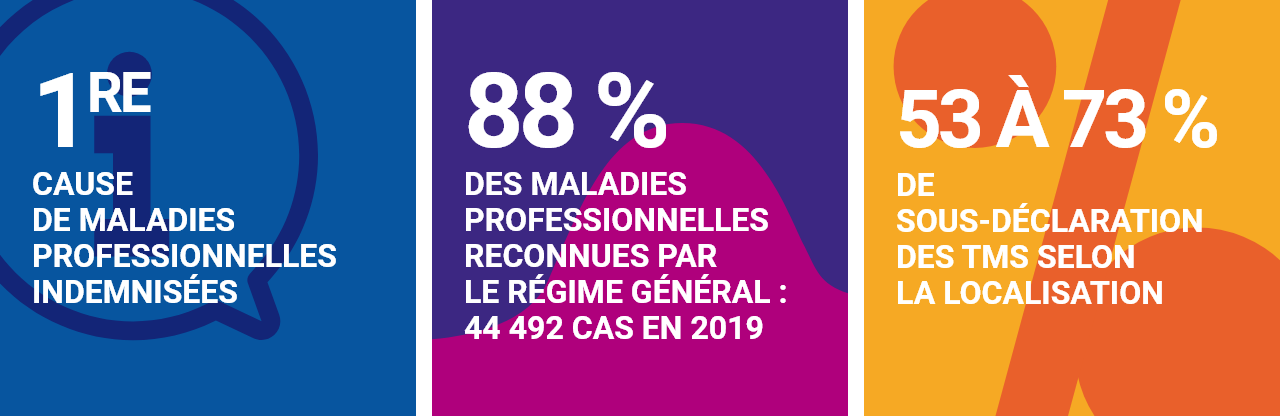
Musculoskeletal disorders are the leading cause of compensated occupational diseases, accounting for 88% of occupational diseases recognized by the general social security system: 44,492 cases in 20191.
In 2017, as in 2010, construction workers were more exposed to biomechanical stressors than workers in other sectors, and were less exposed to psychosocial risk factors and organizational stressors.
Co-exposure to biomechanical stressors and work pace stressors has decreased slightly but still affects more than one in three workers (35%).
As in 2010, exposure to biomechanical stressors affects men and manual laborers more in 2017.
In 2017, employees in road and railway construction were more exposed than in 2010 to twisting or crouching positions (road and highway construction) as well as to industrial stress and “job strain” (bridge and tunnel construction).
Workers in floor and wall covering are particularly exposed to twisting or crouching positions and have less flexibility regarding the ability to take breaks, with statistically significant changes between 2010 and 2017.
Occupational exposures to various stressors in the electrical and plumbing installation subsector show a trend toward improved exposure to biomechanical, organizational, and psychosocial stressors for the workers concerned.
Learn more

enquêtes/études
19 September 2022
The results of this study suggest that prevention efforts should be directed in particular toward the road and rail construction subsectors (road and highway construction, bridge and tunnel construction) and floor and wall covering work, as well as toward employees of small construction companies.
[1] Cnam. 2019 Annual Report [Internet]. Paris: Health Insurance – Occupational Risks; 2020, 168 p.
thematic dossier
Dues à des expositions professionnelles, les principales maladies en lien avec le travail sont surveillées par Santé publique France dans l’objectif d’élaborer, avec les partenaires, les...