



Hepatitis A: 2020 Statistics
Santé publique France has released its annual surveillance data on hepatitis A in France. The year 2020 saw a decline in the number of reported cases in France, most likely due to the COVID-19 pandemic.

Hepatitis A
thematic dossier
What is hepatitis A?
Acute hepatitis A is a virus that affects the liver and is most commonly spread through hand-to-hand contact or by ingesting food or water contaminated with feces. Prevention relies on good hygiene and vaccination. In France, hepatitis A has been a notifiable disease since 2005.
Key Facts About Hepatitis A
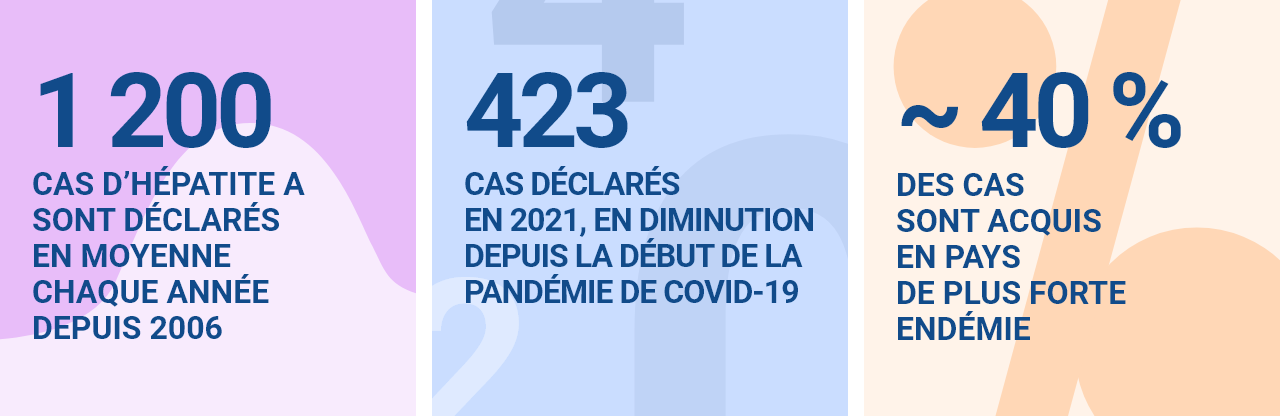
Hepatitis A in France: Key Figures and Findings for 2020
A decrease in the number of reported cases between 2019 and 2020, most likely due to the COVID-19 pandemic
411
This is the number of hepatitis A cases reported in France in 2020, compared to 1,277 in 2019.
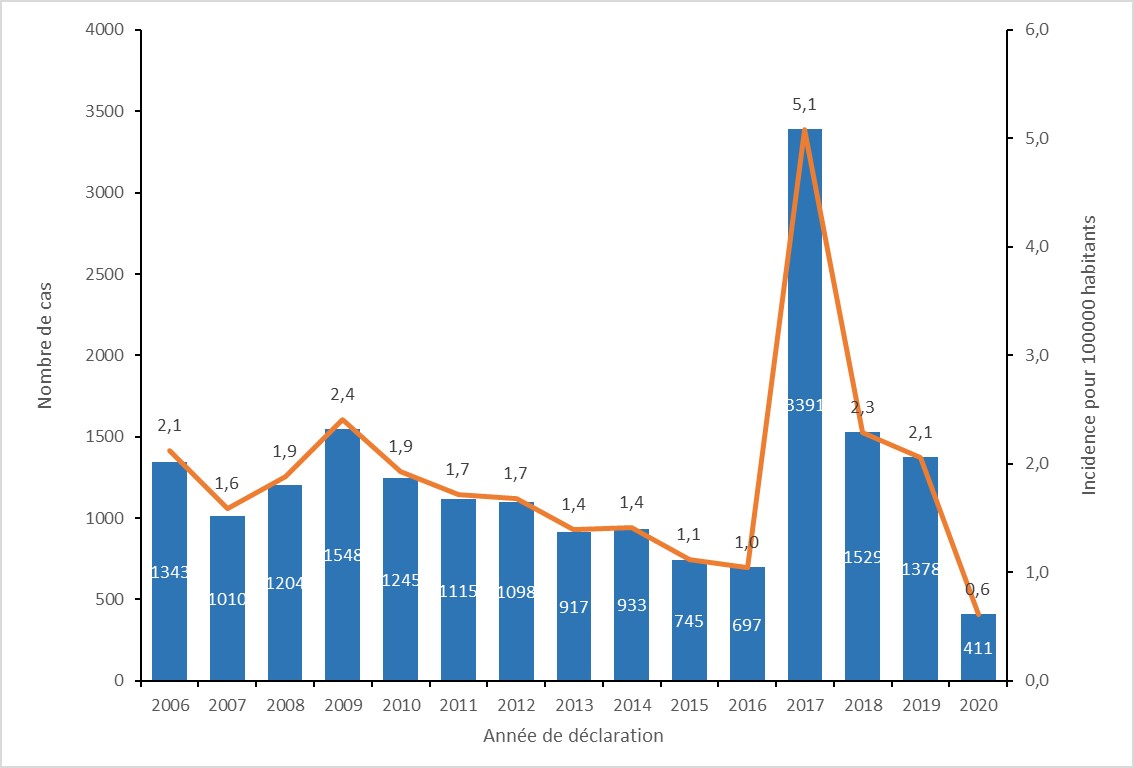
The year 2020, marked by the emergence and subsequent pandemic of SARS-CoV-2, saw a decrease in the number of reported hepatitis A cases in France. In fact, 411 cases of acute hepatitis A were reported in 2020 (vs. 1,277 in 2019) with a reporting rate of 0.6 per 100,000 inhabitants (vs. 2.1 per 100,000 inhabitants in 2019).
This decrease appears to be largely due to:
the sharp drop in the number of cases linked to travel abroad due to international travel restrictions imposed during part of 2020 (see Figure A);
the implementation of preventive measures in response to the COVID-19 pandemic, which limited the spread of the hepatitis A virus (hand hygiene, closure of schools and restaurants, lockdowns, curfews).
Figure A. Number of reported cases of acute hepatitis A by month of diagnosis and by travel history outside mainland France, and percentage of cases involving travel (2006–2019 vs. 2020), mainland France, 2020.
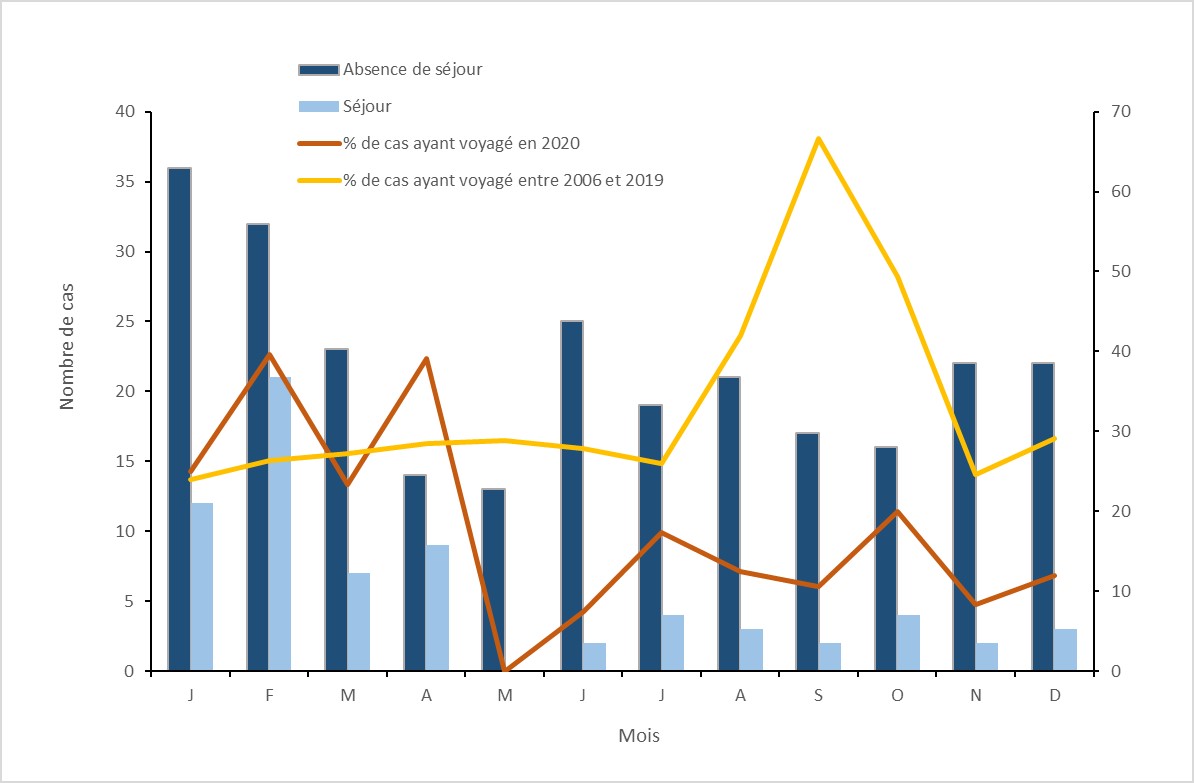
Changes in healthcare-seeking behavior, particularly the reduced tendency to consult a doctor for mild symptoms, may also have contributed to this decline in the incidence of reported cases. Indeed, such low levels have never been recorded in the 14 years of surveillance through mandatory reporting (see Figure B).
Figure B. Number of cases and annual case-notification rate per 100,000 population, acute hepatitis A, France, 2006–2020
What was the profile of reported hepatitis A cases in France in 2020?
In 2020, reporting rates were comparable among women and men. In total, 51% of cases in 2020 were women.
The average age of reported cases was 35 years. The age group with the highest incidence in 2020 was 6 to 15 years old, as is typically observed (with the exception of 2017, which was marked by an outbreak that particularly affected men who have sex with men).
What was the geographic distribution of hepatitis A in France in 2020?
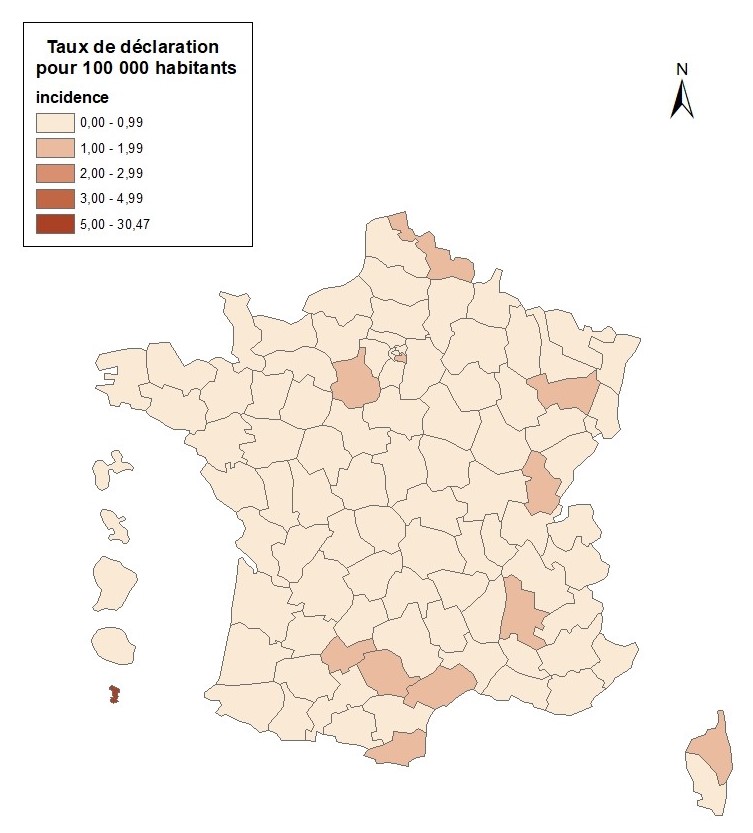
The highest reported rate was observed in the overseas territory of Mayotte, as in previous years. This rate stood at 30.5 per 100,000 inhabitants in 2020.
In the rest of the country, reported rates ranged from 0 (in 32 departments) to 1.5 per 100,000 inhabitants (see map). By comparison, in 2019, only 6 departments reported no cases of hepatitis A during the year.
Map. Incidence rate (per 100,000 inhabitants) of acute hepatitis A by department, France, 2020
What were the main risk factors for hepatitis A in France in 2020?
In 2020, the epidemiology of hepatitis A was significantly influenced by the COVID-19 pandemic. Thus, the main risk exposures in the 2 to 6 weeks before the onset of symptoms were:
seafood consumption in 28% of cases;
travel outside mainland France in 21% of cases;
living in the household of a child under 3 years of age in 20% of cases.
By comparison, in 2019, the main risk exposures were a trip outside mainland France (47% of cases), the presence of known hepatitis A cases in the immediate environment (33%), and living in a household with a child under 3 years of age (22%).
How can hepatitis A be prevented?
Prevention of hepatitis A relies mainly on hygiene and vaccination.
When it comes to hygiene, wash your hands regularly with soap and water, especially after using the restroom, after changing a baby’s diaper, before preparing meals, and before eating or feeding children.
Regarding vaccination, an effective vaccine has been available since 1992. Protection takes effect approximately two weeks after vaccination and is likely to last a lifetime if the vaccination series is completed (2 doses). In France, it is recommended for people at risk of developing a severe form of the disease and for those particularly exposed to the virus.
What are Santé publique France’s responsibilities regarding hepatitis A?
Monitoring the epidemiological trends of hepatitis A
Rapidly detect clusters of cases or outbreaks
Enabling the adaptation of preventive measures
Informing healthcare professionals
Learn more about Santé publique France’s work regarding hepatitis A
Vaccination Information Service
What are vaccines for? How do they work? At what age should children be vaccinated? Vaccination-info-service.fr answers the most frequently asked questions about vaccination. A separate...
Odysseus
Santé publique France's open data portal, based on its 70 surveillance systems, surveys, and scientific expertise.