


Flu: The outbreak continues across mainland France
The flu outbreak is affecting the entire mainland and certain overseas departments. However, the national peak has not yet been reached in mainland France. Santé publique France publishes the latest available figures in its weekly bulletin, which track changes in the number of people affected by the flu.
All regions are in the epidemic phase
The flu epidemic continues throughout mainland France and appears to be stabilizing in most regions. This epidemic is primarily caused by the A(H3N2) virus and is particularly severe among the elderly. During the third week of January, among people aged 65 and older, the number of emergency room visits and hospitalizations decreased compared to the previous week. Since the start of the outbreak, the number of outbreaks of acute respiratory infections has been high in senior care facilities.
Since November 1, 2016, 926 severe cases of influenza have been reported to Santé publique France.
In the overseas departments, the epidemic appears to be stabilizing in Martinique and is on the decline in Guadeloupe. The epidemic continues in French Guiana.
Regional Alert Level
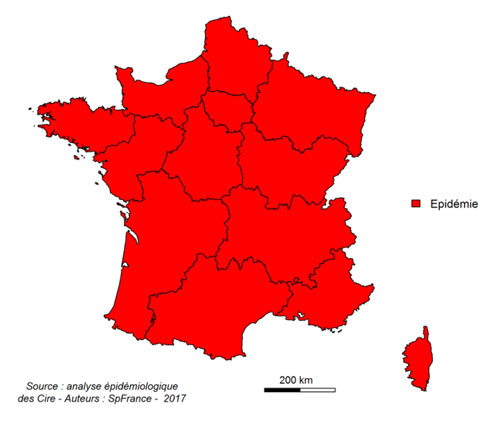
Santé publique France analyzes data from its network of partners on a weekly basis, both at the national and regional levels. Epidemiological analysis, together with virological data, contributes to the classification of regions and mainland France into three levels: absence of a flu epidemic, the pre- (or post-) epidemic phase, and the epidemic phase.
Excess all-cause mortality among older adults
An increase in all-cause mortality has been observed at the national level since mid-December 2016. This increase affects almost exclusively people aged 65 and older. As of January 24, 2017, the number of excess deaths from all causes is estimated at 8,100, although the proportion attributable to influenza cannot currently be estimated.
Learn more about mortality assessment
Simple steps to protect yourself from the flu
Simple hygiene measures (limiting contact, washing hands regularly, covering your mouth and nose when coughing or sneezing, using disposable tissues) help limit the spread of this disease, which spreads very quickly from person to person.
However, vaccination remains the best preventive measure to protect against the flu, limit complications, and reduce the risk of hospitalization. It takes 15 days after the injection for the vaccine to provide protection, and those who have not been vaccinated before the outbreak run the risk of becoming infected before they are protected.
In the event of the flu, early antiviral treatment is recommended for at-risk individuals.