
thematic dossier
Vector-borne diseases
Les maladies à transmission vectorielle sont des maladies infectieuses transmises par des vecteurs, essentiellement insectes et acariens hématophages. Santé publique France participe à leur...


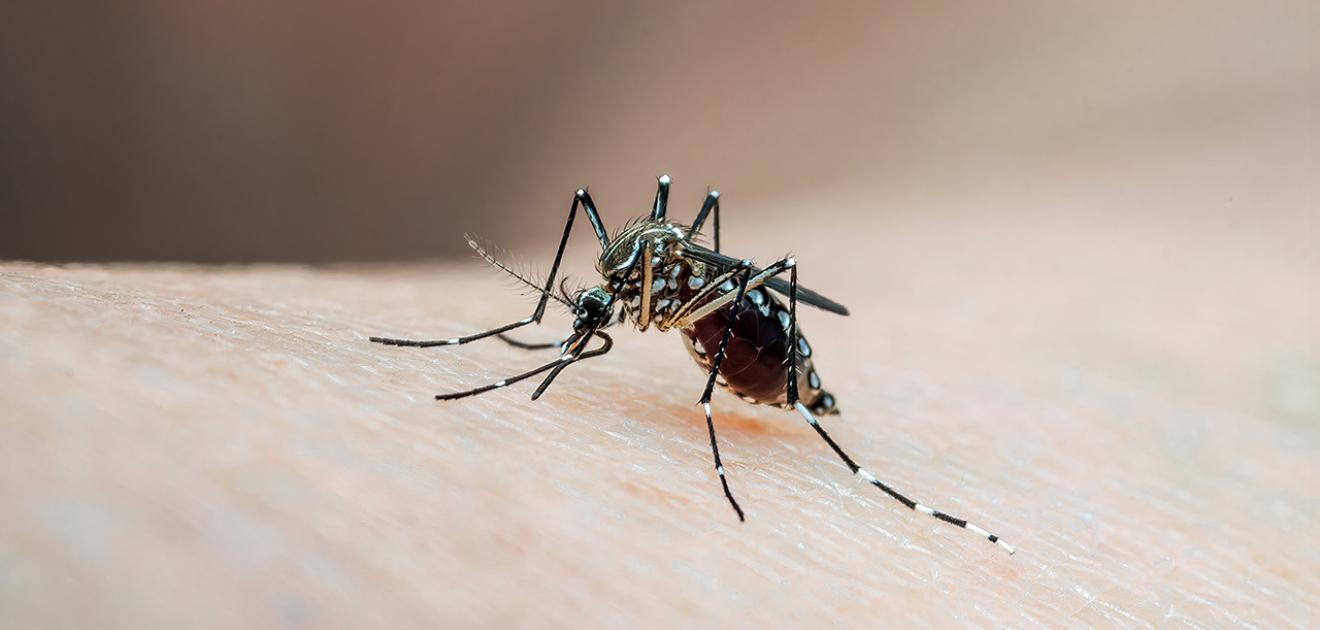
Since July 2022, 47 locally acquired cases of dengue fever, spread across five outbreaks, have been recorded in mainland France as part of the enhanced seasonal surveillance program for chikungunya, dengue, and Zika in the mainland departments. Controlling disease-carrying mosquitoes is essential to prevent new outbreaks.

thematic dossier
Dengue is an infectious disease caused by an arbovirus: the dengue virus. This virus is transmitted by mosquitoes of the genus Aedes: Aedes aegypti and Aedes albopictus (the latter is also known as the tiger mosquito). From May 1 to November 30 each year, Santé publique France coordinates enhanced seasonal surveillance of chikungunya, dengue, and Zika in the metropolitan departments, in collaboration with the relevant Regional Health Agencies (ARS).
In metropolitan France, surveillance of dengue (as well as chikungunya and Zika) is based on mandatory reporting of all biologically confirmed cases.
Santé publique France has detected 5 episodes of local dengue transmission. As of September 20, 2022, these total 47 cases, which is the highest number ever recorded in metropolitan France. Previously, the highest number had been 14 cases of local dengue in 2020.
The size of the outbreaks is larger than previously, particularly the outbreak in St-Jeannet-Gattières-La Gaude in the Alpes-Maritimes, with 29 cases, plus 2 cases identified in the municipality of Saint Laurent du Var. Until now, dengue transmission episodes had remained very localized, sometimes limited to a single locally acquired case. The largest outbreak involved 8 people in Nîmes in 2015.
Beyond the number of cases, 2022 is marked by the spread of the risk across mainland France, with outbreaks occurring in departments previously unaffected: the Pyrénées-Orientales, the Hautes-Pyrénées, and the Haute-Garonne. Previously, cases had occurred mainly in the Var, Alpes-Maritimes, Hérault, and Gard.
See also

données
The symptoms of dengue fever are most often flu-like (fever, headache, body aches), possibly accompanied by a rash, and appear within 3 to 14 days (4 to 7 days on average) after being bitten by an infected mosquito. Dengue fever affects infants, young children, and adults alike. Although usually mild, dengue can sometimes cause severe symptoms and may lead to complications such as organ failure and hemorrhagic forms, which may require hospitalization in the intensive care unit.
This trend is linked to several factors, including:
the spread across the country and high densities of the Aedes albopictus mosquito;
the resumption of travel and the return of travelers from endemic areas;
climatic conditions favorable to mosquito breeding, such as heat and rain.
Since 2010, we have seen these outbreaks recur, and they have gradually become a yearly occurrence. These outbreaks may involve dengue fever, as well as chikungunya and Zika, all of which are transmitted by the Aedes albopictus mosquito.
In the future, these outbreaks are expected to recur, increase in scale, and occur in new regions. The development of an epidemic cannot be ruled out, as was the case in Italy in 2007 and 2017 with outbreaks of 300 to 400 cases of chikungunya. The emergence of “new” viruses could also occur, as was recently the case with the chikungunya and Zika viruses in 2006 and 2016.
Dengue prevention relies on individual and collective actions:
Eliminate breeding sites at home and in public spaces: store anything that can hold water (buckets, watering cans) out of the rain; seal tightly or cover water reserves (barrels, containers, untreated pools) with a mosquito net; regularly empty flower pot saucers; ensure gutters drain properly; remove yard waste that can become resting places for adult mosquitoes.
Protect yourself with long-sleeved clothing, mosquito nets, and repellents (sprays or creams, coils, electric diffusers), especially when traveling to endemic areas and upon returning from travel to avoid infecting mosquitoes. Protection is particularly necessary during the day, as Aedes mosquitoes bite mainly during daylight hours, primarily outdoors, with peak activity in the early morning and late afternoon.
Implementation of mosquito control by the ARS as soon as an imported or locally acquired case is reported (dengue is a notifiable disease). These interventions help eliminate potentially infected adult mosquitoes and remove larval breeding sites to limit mosquito proliferation in the affected area and break the chains of virus transmission. Numerous research projects aim to develop and implement new techniques that do not rely on mosquito control using chemical insecticides.
Developing vaccines: A first dengue vaccine has been released onto the market with usage restrictions; in particular, it is not recommended for people living in mainland France. Others will follow soon. There is not yet a vaccine against chikungunya and Zika
Mosquito-borne infections are among the infectious diseases most closely linked to climate change and, above all, to global shifts: warming, drought, heavy rains, and flooding all promote the proliferation of mosquitoes. Globalization—with increased trade and human travel across the globe—along with deforestation and urbanization, are major factors contributing to the spread of mosquito-borne diseases.
In the face of these combined factors, a global, multidisciplinary response involving all societies and populations is necessary. This is the foundation of the “One Health” concept.
thematic dossier
Les maladies à transmission vectorielle sont des maladies infectieuses transmises par des vecteurs, essentiellement insectes et acariens hématophages. Santé publique France participe à leur...

Visit the website of the Ministry of Health and Prevention