
Chair of Public Health at the Collège de France – Inaugural Lecture by Rémy Slama
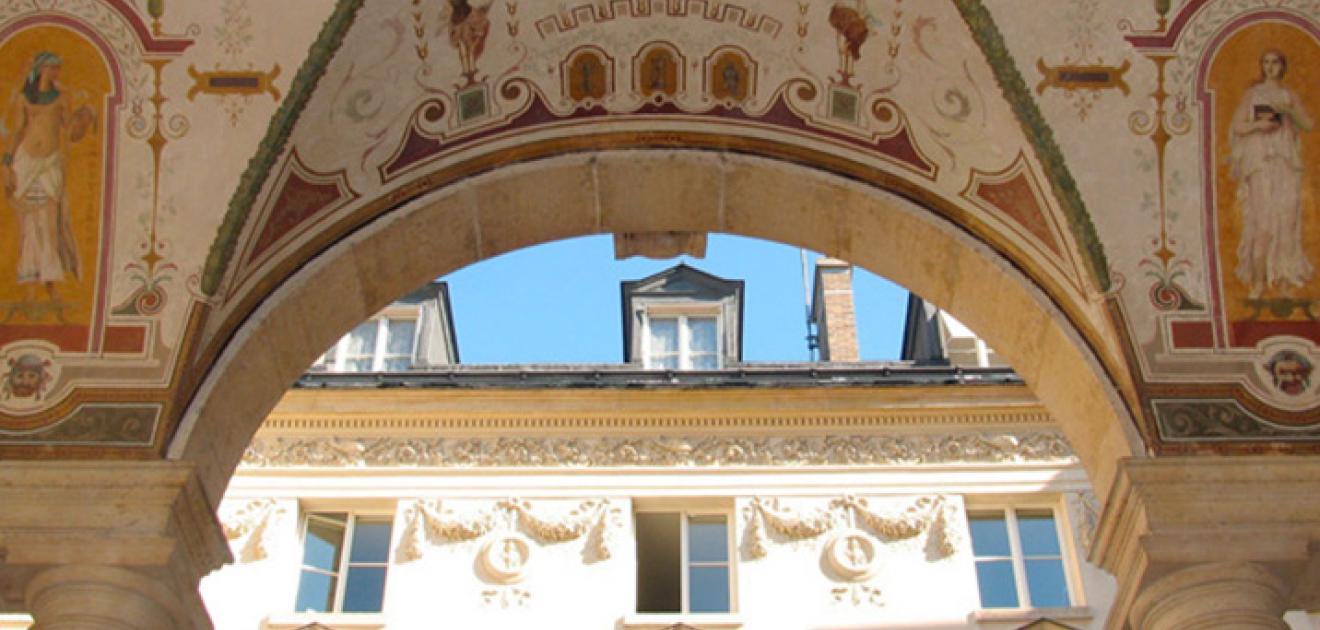
For the third time, Santé publique France is supporting the Chair of Public Health at the Collège de France. Rémy Slama, an environmental epidemiologist, will deliver a lecture on the external causes and conditions of disease and health. His inaugural lecture will take place on March 31, 2022.
Established in partnership with Santé publique France, the Collège de France’s Chair in Public Health is designed to promote excellence in research and intellectual debate at the highest level on public health issues, and in particular to raise awareness of contemporary challenges—in France and around the world—among the medical and scientific communities, policymakers, and the general public, by inviting a different distinguished scholar to hold the chair each year.
On March 31, this third year will begin with Rémy Slama’s inaugural lecture, titled “External Causes and Conditions of Disease and Health,” which will trace the emergence of environmental health research.
The theme taught this year by Rémy Slama lies at the heart of public concerns and our work. It perfectly illustrates the continuum between research and teaching in epidemiology for the development of prevention in the context of public health challenges. The culture of risk reduction thus relies on collective action at the most relevant level (citizen, institutional, political). Knowledge is the fundamental foundation for every citizen to take charge of their own health.
Information on accessing the inaugural lecture, Thursday, March 31, at 6 p.m., open to the public at the Collège de France, with a live stream (free admission).
Then, his series of eight lectures, “Relationships between Human Health and the Environment in the Anthropocene,” will begin on April 6, 2022.
Her symposium, “Climate Change, Biodiversity, Human Health and Societies: Threats, Opportunities, and Research Needs,” will be held on June 16 and 17, 2022.
Rémy Slama
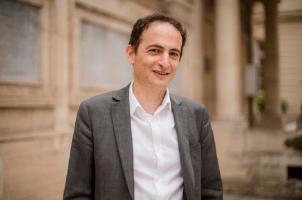
A research director at Inserm, he heads the Thematic Institute of Public Health and the environmental epidemiology team at the Institute for the Advancement of Biosciences (Inserm, CNRS, University of Grenoble-Alpes). He holds a Ph.D. in epidemiology from Paris-Sud University, is a graduate of École Polytechnique, and is an agricultural engineer. He chaired the scientific advisory board for the national research program on endocrine disruptors and co-authored a report for the European Parliament on the effects and regulation of these substances. He is co-author of some 100 scientific publications and the book *Le Mal du dehors: The Influence of the Environment on Health* (Quae, 2022). He received the Tony McMichael Award from the International Society of Environmental Epidemiology.
“Environmental health research focuses on the more distant causes of diseases—the causes of causes of death, so to speak. These take the form of physical, chemical, behavioral, social, and, to this day, infectious factors, although the latter no longer represent the primary contribution. All of this forms the exposome, a concept scientists have been exploring for the past fifteen years or so. It refers to the totality of environmental exposures we are subjected to from conception through the end of life.” Rémy Slama.
This quote is taken from his exclusive interview “The Fight Against Climate Change Is an Opportunity to Improve Health,” available on the Collège de France website along with his course schedule and biography.
3 Questions for Laetitia Huiart, Scientific Director of Santé publique France
Why is Santé publique France’s support for the Chair of Public Health at the Collège de France important?
This support is important for promoting public health. Since its creation in 2018, the Public Health Chair has invited a prominent figure each year to teach at the Collège de France. Bringing major public health issues to the forefront, encouraging scientific excellence, and making these issues accessible to a very broad audience are shared objectives that we pursue together with the Collège de France. The very broad audience made possible by the Collège de France, extending beyond traditional academic circles, is fundamental to fostering a shared culture of public health.
How does this collaboration enable us to explore and share key areas of work in public health?
Each year, the laureate must structure their teaching over the course of the program and offer various formats, including lectures, of course, but also other formats such as seminars. This helps engage the audience and foster interaction with them. Participation in the seminar is designed to be very open, which encourages the exchange of ideas and approaches to initiate new collaborations among participants.
Furthermore, the topics covered address major public health issues and concepts; they are therefore at the heart of the stakeholders’ current concerns, and they engage and unite people.
What is the role of this event in society and democracy, particularly in the fields of science and health?
This Chair of Excellence at the Collège de France is an opportunity to better explain science and public health and to put into perspective the need for open scientific debate. Its timing and format, somewhere between lectures and seminars, foster calm scientific discussions. And it is precisely the space given to calm science that is interesting here. It counterbalances the immediacy demanded by the media cycle and opens up new perspectives.
About the Collège de France
Since 1530, the Collège de France has fulfilled a dual mission: to serve as both a center for the most daring research and a venue for its teaching. It thus offers instruction to all interested members of the public, with no enrollment requirements, in “knowledge currently being developed in all fields of the humanities, sciences, and arts.” The Collège de France is an associate member of PSL University.