


The Agricultural Sector and Pesticides
Santé publique France has published the results of a study on sugarcane workers in Réunion and their exposure to pesticides. This provides an opportunity for the agency to revisit the exposure of agricultural workers to chlordecone in the French West Indies, to arsenic derivatives in mainland France, and the link between pesticide exposure and Parkinson’s disease. Santé publique France will continue its work documenting pesticide exposure for major crops in mainland France, including wheat, corn, potatoes, and grapes. Its plan is to cross-reference the crop-exposure matrices developed in the Matphyto program with information collected from the Coset MSA cohort (a cohort of members of the Mutualité sociale agricole: employees, farm operators, spouses of farm operators, family helpers) in order to characterize, on the one hand, pesticide exposure among agricultural populations and, on the other hand, to study the links between such exposure and the onset of chronic (long-latency) diseases such as cancer, for example.
The Study on Sugarcane Workers in Réunion
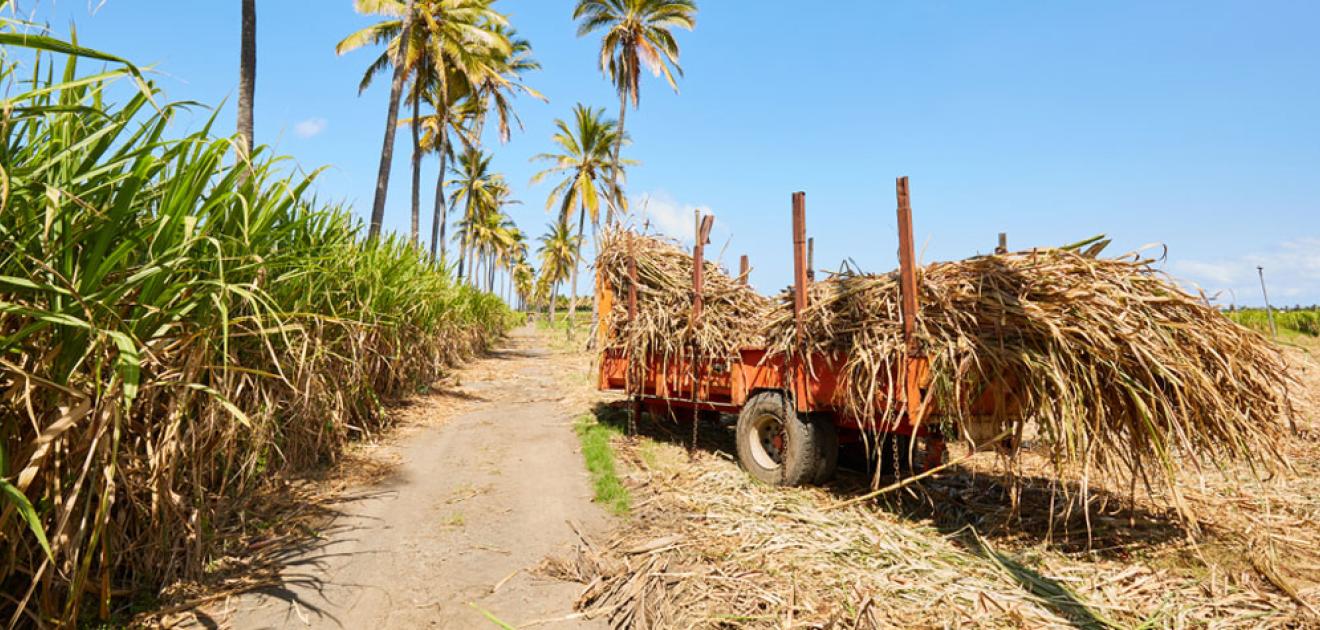
For decades, sugarcane farmworkers in Réunion have handled numerous pesticides. The health risks for farmers who handle these pesticides are greater than those for the general population due to more intense and frequent exposure through various tasks: preparing spray mixtures, applying pesticides, cleaning equipment, re-entering treated fields, etc. Legislation (bans on certain pesticides) and the management of associated health conditions are evolving as new health effects linked to these chemicals are discovered.
Through its Matphyto-DOM program, Santé publique France has set out to reconstruct this exposure for sugarcane in Réunion over the period from 1960 to 2014. The results, released today, show in particular that:
28 different active ingredients were used on sugarcane, 19 of which are herbicides such as glyphosate. By 2010, the final year of the study, 15 were no longer authorized on the French market.
Between 44% (1981) and 88% (2010) of sugarcane workers were exposed to at least one carcinogenic pesticide, which may affect fertility, pregnancy, or the unborn child (reprotoxic), or that cause endocrine disruption, affecting between 6,300 and 10,000 people over the study period.
Women account for more than 25% of agricultural workers exposed to endocrine-disrupting and reprotoxic pesticides.
The study thus highlights a significant need for targeted preventive measures to limit, if not stop, these pesticide exposures before the onset of serious chronic diseases.
The Matphyto program applied to metropolitan France and the French overseas departments
Santé publique France began by piloting the Matphyto program in mainland France, particularly regarding the use of arsenic-based pesticides by vineyard workers, before adapting it to three overseas departments: the islands of Guadeloupe, Martinique, and Réunion.
In mainland France, between 60,000 and 100,000 vineyard workers were exposed to arsenic-based pesticides between 1945 and 2001.
In mainland France, Santé publique France conducted a retrospective study (from 1945 to 2001) to identify vineyard workers (age, sex, working hours, etc.) exposed to arsenic-based pesticides and to determine more precisely their number at the time this substance was banned because it was classified as a known carcinogen. By using the "vine-arsenic-based pesticides" matrix from the Matphyto program, cross-referenced with data from various agricultural censuses, this study estimated that 20 to 35% of people working on commercial vineyards were exposed to these substances, meaning, over the periods studied, between 60,000 and 100,000 people were exposed each year.
In the French West Indies, a large majority of agricultural workers in banana plantations were exposed to chlordecone.
In the French West Indies, Santé publique France retrospectively documented the exposure of banana farm workers to all pesticides used in this crop from 1960 through 2015, including chlordecone. Matphyto-DOM has thus shown that the vast majority of agricultural workers in Caribbean banana plantations were exposed to chlordecone during the period when this pesticide was used (77% in 1989) and that current workers are still exposed to other pesticides with potentially harmful health effects.
Parkinson’s disease: a common condition among farmers
According to a study by Santé publique France, conducted in collaboration with Inserm and published in 2018, approximately 1,800 new cases of Parkinson’s disease occur annually among farmers aged 55 and older, representing an incidence 13% higher than among individuals enrolled in other health insurance plans. The incidence was slightly higher among people living in the most agricultural districts, including those not working in agriculture, and particularly in those where the proportion of farmland allocated to viticulture is highest.
Santé publique France’s method for reconstructing occupational pesticide exposures
Retrospective assessment of pesticide exposure is essential for epidemiological studies. It is necessary to understand and establish links between farmers’ activities throughout their careers and the potential onset of diseases such as cancers or neurodegenerative diseases, for which the latency period between exposure and the onset of the disease can be as long as 40 years. In France, data on current or past pesticide use in agriculture are fragmented. Reconstructing the history of occupational exposure is challenging due to the diversity and evolution of the products used over time, as well as the great heterogeneity of agricultural activities across France (wheat, corn, potatoes, vineyards in mainland France, bananas in the French West Indies, sugar cane in Réunion, etc.). To address this need, Santé publique France is developing the Matphyto program.
This tool makes it possible to reconstruct these exposures using "crop-exposure matrices" (CEMs). Each "matrix" lists, for a given crop, all pesticides (detailed by chemical families and specific active ingredients) that may have been used. The agency then cross-references these matrices with the CIPA-Tox database it created to identify known or suspected health effects associated with chronic exposure to each active ingredient in pesticides registered in France since 1961. Finally, it uses agricultural census data to calculate the number of agricultural workers exposed over a given period to certain pesticides identified as harmful to health.
The calculations are refined by region, age, and sex, which allows for the identification of sociodemographic characteristics and their evolution over time.
The research produced by Matphyto makes it possible to identify all pesticides used on a crop, characterize their potential health effects, and count the populations of exposed workers. Its goal is to estimate farmers’ exposure to the main active ingredients in order to prevent it as effectively as possible.
Future studies
In the agricultural sector
In the general population
In addition, two studies are underway to assess the health impacts of pesticide exposure on populations living near agricultural areas:
A national epidemiological study (Géocap Agri), in partnership with Inserm, will assess whether pediatric cancers are more common among populations living near certain agricultural crops. Results are expected in 2020,
A multi-site bioaccumulation study among residents living near agricultural areas (samples from 1,400 exposed individuals and 700 unexposed individuals) combined with environmental measurements of air (indoor and outdoor) and dust in living spaces, in partnership with ANSES.
Learn more/Studies and data from Santé publique France
Report and summary: "Assessment of occupational exposure to pesticides used in sugarcane cultivation on Réunion Island and their health effects"
Pesticide exposure in the agricultural sector - News from February 22, 2018
Farmers’ health: occupational risks and exposures/The Coset-MSA cohort - News from February 22, 2018
Chlordecone, a special case in overseas territories - News from February 22, 2018












