




The disease
The same modes of transmission
The hepatitis B virus (HBV) is transmitted through sexual contact (unprotected sex), through direct or indirect contact with infected blood (such as sharing injection equipment among drug users, or getting a tattoo or piercing with non-disposable equipment), and from mother to child, primarily during childbirth.
Transmission of HBV during medical care is possible if universal hygiene precautions are not adequately followed. Since the introduction of routine screening of blood donations, the residual risk of transmission through transfusion is extremely low.
Hepatitis D virus (HDV) is transmitted through the same routes as HBV, its host virus.
HDV transmission is only possible in the presence of HBV. Transmission can occur simultaneously—referred to as co-infection—or in a patient already chronically infected with HBV, in which case it is called a Delta superinfection.
Hepatitis B, a condition that is often asymptomatic but can progress to liver cancer
Infection with HBV causes acute hepatitis, which is most often asymptomatic but can progress, in less than 1% of symptomatic cases, to fulminant hepatitis—often fatal in the absence of a liver transplant.
The incubation period for HBV infection is generally 45 to 180 days.
If symptoms occur, the main manifestations are jaundice, fatigue, loss of appetite, abdominal pain, nausea, and vomiting; more rarely, joint or muscle pain.
Acute infection usually resolves spontaneously. If not, the infection becomes chronic (persistent detection of the HBsAg antigen beyond 6 months). The rate of progression to chronicity varies greatly by age: from 90% in infants (< 1 year), to 25–30% in children aged 1 to 5 years, to less than 5% in adults.
Chronic infection may remain asymptomatic for a long period and, in 2–10% of cases, progress in the medium to long term to cirrhosis or hepatocellular carcinoma. Infection with HDV also causes acute hepatitis, which can be mild or fulminant, with the potential to progress to chronic infection.
Prevention of hepatitis B and D relies on vaccination and screening. This is supplemented by practicing safe sex (using condoms), adhering to hygiene guidelines for any procedure—medical or otherwise—that may pierce the skin (acupuncture, tattooing, piercing, barber services, etc.), and the consistent use of personal, single-use injection or snorting equipment for drug users…
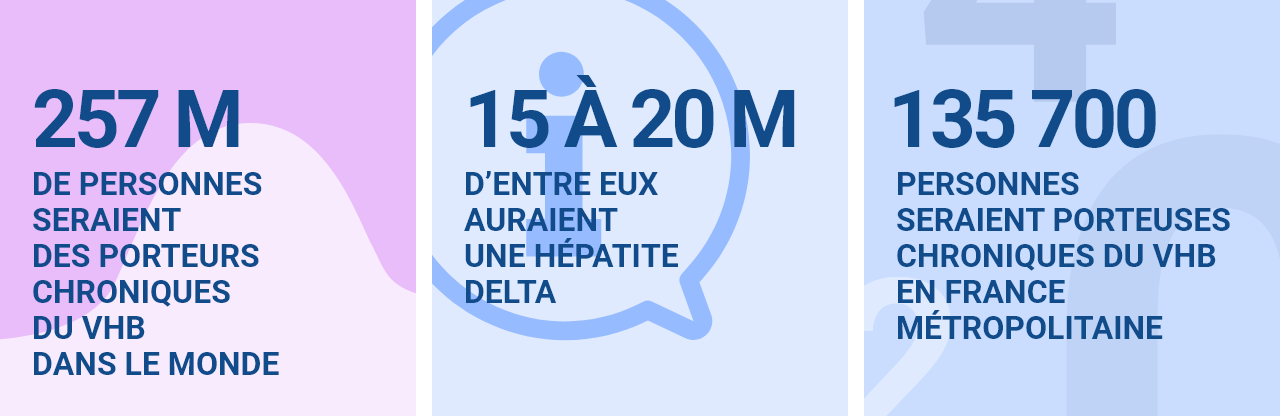
Key Statistics on Hepatitis B and D
Vaccination: The Primary Means of Preventing Hepatitis B and D
Hepatitis B vaccination is mandatory in France for all infants born on or after January 1, 2018. Catch-up vaccination is recommended for children and adolescents up to age 15: vaccinating them when they are young protects them later in life when they may encounter the virus.
Compared to most countries in Africa or Asia, France has a low prevalence of hepatitis B, and the risk of infection is very low during childhood. Adolescents and especially young adults are most at risk of acquiring the hepatitis B virus (through sexual relations with multiple partners, intravenous drug use, travel to high-risk countries, occupations involving exposure to blood, etc.). It is important to ensure that children are vaccinated before the age at which risk arises, that is, before age 16.
The need to vaccinate children as early as the first year of life is based on several considerations:
The vaccine is highly effective in infants, and the duration of protection it provides is sufficient to protect a person vaccinated in early childhood from exposure to the risk, even decades later.
The vaccine is very well tolerated, and no reports of serious side effects have ever emerged.
Including this vaccine in hexavalent combination vaccines protects infants without requiring additional injections, whereas at least two doses are needed to vaccinate older children.
Finally, the very high vaccination coverage among infants makes it possible to envisage the eventual elimination of hepatitis B in France.
Since 1982, more than 1 billion doses of vaccine have been administered worldwide. Hepatitis B vaccination has been recommended by the World Health Organization (WHO) for all infants since 1997 and is included in the vaccination schedules of all European Union countries (with the exception of a few countries, mainly in Northern Europe, where the infection is very rare).
Hepatitis B vaccination is mandatory for all infants born on or after January 1, 2018, starting at 2 months of age.
Catch-up vaccination is also recommended for all children and adolescents up to age 15 who have not previously been vaccinated, as well as for certain individuals at increased risk: travelers to certain high-risk countries, newborns of mothers with the HBs antigen in their blood, people who have sex with multiple partners, people who use drugs by injection or snorting… Vaccination is also mandatory in certain professions, particularly healthcare workers
See also

To learn more about specific and professional situations
There is currently no specific vaccine against the hepatitis D virus, but vaccination against hepatitis B provides protection against hepatitis D. In the absence of a specific means of preventing HDV superinfection, the only protection lies in primary prevention (hygiene and preventive measures related to the mode of transmission).
Screening of at-risk individuals
17.5%
of chronic hepatitis B carriers are aware of their infection.
Apart from mandatory screening for pregnant women and blood donors, the screening strategy for hepatitis B virus infection is not clearly defined. Screening targeted at individuals at risk of exposure to HBV is recommended.
Indeed, many people are unaware of their HBV serostatus, as only 17.5% (95% CI: 4.9–46.4) of chronic hepatitis B carriers were aware of their infection in 2016.
Screening enables the management of infected individuals. It also allows for the vaccination of those who are not immune and for whom vaccination is indicated.
Current treatments do not cure the infection but help control it
Hepatitis B treatment relies on two classes of drugs: interferon α and nucleoside or nucleotide analogs. These treatments do not achieve complete viral clearance but only inhibit viral replication.
There is no specific effective treatment for hepatitis D.
International regional disparities
Internationally, there are broadly three zones of chronic hepatitis B prevalence (HBsAg carriage), corresponding to different modes of transmission and risk levels:
A highly endemic region with an HBsAg carrier prevalence of ≥8% (Sub-Saharan Africa, Southeast Asia, Southern China, the Amazon Basin), where the majority of infections are acquired at birth or during the first years of life
An area of moderate endemicity with an HBsAg prevalence between 2% and 7% (the Middle East, Central and South America, Central Asia, the Indian subcontinent, certain countries in Southern and Eastern Europe), where infection occurs at all ages;
A low-endemic zone with an HBsAg prevalence of less than 2%, comprising primarily industrialized countries (Western and Northern Europe, North America, Australia), where infection occurs mainly in adulthood, primarily through sexual transmission.
France is classified as a low-endemic country for the hepatitis B virus. There are regional and departmental variations.
In relation to

Hepatitis C
thematic dossier
Hepatitis C is a viral infection primarily transmitted through blood. Screening for the disease is crucial to ensuring that infected individuals receive the treatments that can now lead to a cure.

HIV/AIDS
thematic dossier
HIV, or Human Immunodeficiency Virus, is a sexually transmitted human retrovirus. It weakens the immune system, and if left untreated, leads to AIDS.

Vaccination
thematic dossier
Contagious diseases most often affect children at a very young age. Because children are particularly vulnerable, they are a priority target for vaccination programs.