

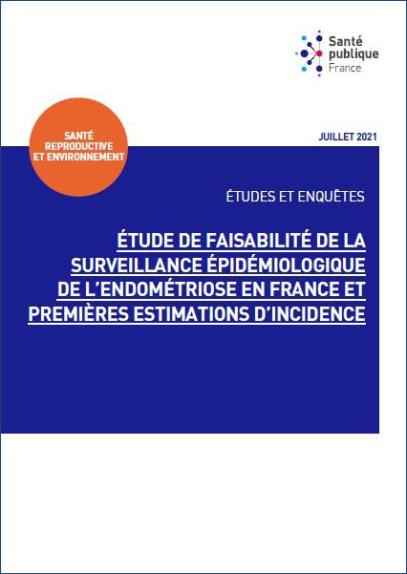
Feasibility study on the epidemiological surveillance of endometriosis in France and initial estimates of incidence
Santé publique France has established a national epidemiological surveillance system designed to track and analyze reproductive health indicators that may be linked to exposure to endocrine disruptors (EDs). This initiative is part of the national strategy on endocrine disruptors and utilizes existing health databases. Endometriosis was selected as one of the key indicators to monitor, based on the strength of evidence regarding its link to EDs. This study examines the feasibility of monitoring endometriosis in France using data from the National Health Data System (SNDS), particularly for environmental health objectives. A multidisciplinary team comprising specialized clinicians, epidemiologists, statisticians, and scientists experienced in analyzing SNDS databases was formed to develop a strategy for identifying new cases of endometriosis. A literature review on the epidemiology of endometriosis and its possible links to exposure to EDs was conducted. We developed three indicators reflecting hospital care for endometriosis, derived using three case selection algorithms within the Medical Information Systems Program (PMSI): The first is based solely on the selection of ICD-10 codes for endometriosis (N80) as the primary, related, or associated diagnosis; The second uses an approach that supplements the first algorithm with surgical procedure codes derived from a national survey of codes actually used in association with endometriosis, which may lead to a histological diagnosis; The third, more specific algorithm focuses on identifying a selection of surgical procedure codes proposed by experts to identify certain specific forms of endometriosis, such as ovarian endometriotic cysts, which are presumed to be coded most consistently by clinicians. For each indicator, an incident case was defined as the first hospital stay without a previous stay coded for endometriosis in at least the preceding 5 years. During the 2006–2017 period, we identified 30,600, 23,600, and 7,500 new cases per year across France, respectively, using indicators 1 through 3, for all ages combined. To compare our data with the literature, we estimated the crude annual incidence rate for the 2011–2017 period among women aged 10 to 49 years for indicator 1: it is 12.9 per 10,000, which is of the same order of magnitude as in other countries using hospital data. The three indicators can be used to monitor hospital-treated endometriosis at the national level, at a granular scale (zip code), to meet environmental health objectives: temporal, spatial, and spatiotemporal monitoring, and exploration of geographically determined environmental hypotheses. The first indicator is the most sensitive in reflecting the hospital incidence of endometriosis, and the others can be used for sensitivity analyses. The limitations of the proposed surveillance system include an underestimation of the public health problem, since only cases of endometriosis treated in hospitals are identified, and the potential influence of variations in treatment or coding on temporal and spatial trends.
Author(s): Rigou Annabel, Chesneau Julie, Peyronnet Alexia, Balestier Anita, Le Moal Joëlle, Canis Michel, Daraï Émile, Fauconnier Arnaud, Kvaskoff Marina, Zacharopoulou Chrysoula
Publishing year: 2021
Pages: 36 p.
Collection: Studies and Surveys
In relation to
Our latest news

news
Shamonda Virus: First Human Case Detected in France—What Do We Know?

news
Call for Nominations for the Renewal of the Scientific Advisory Board of the...

news